

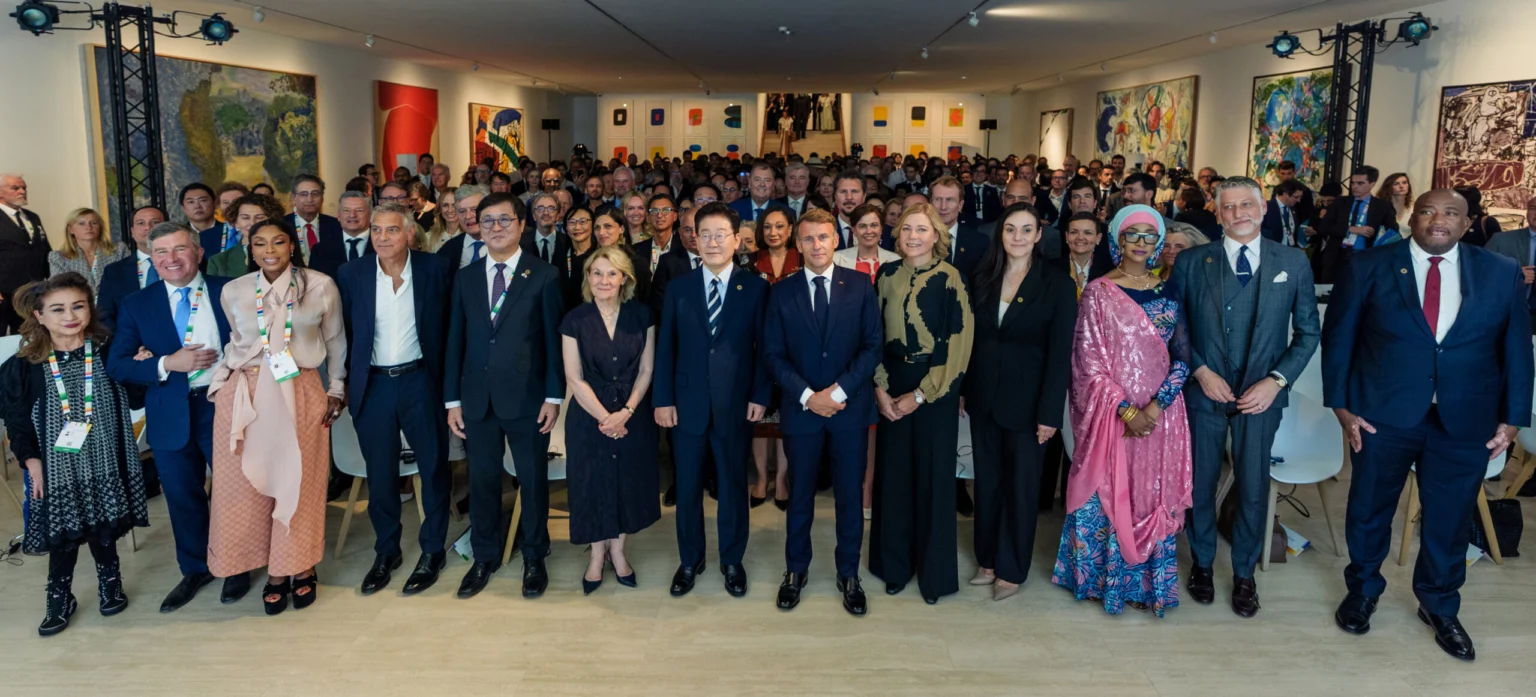
Le lundi 7 septembre 2026, à Saint-Paul de Vence, se tenait le Sommet Lumière, présidé par le Président de la République française, Emmanuel Macron, et le Président de la République de Corée, Lee Jae-myung.
Découvrez en vidéo les 21 rencontres filmées, consacrées à l'avenir du cinéma et de l'image animée.
Premier sommet international consacré à l’avenir du cinéma et de l’image animée, cet événement a réuni 200 responsables publics, dirigeants d’entreprises, créateurs, producteurs, diffuseurs, représentants des plateformes numériques, professionnels du jeu vidéo, acteurs des technologies émergentes et représentants d’organisations internationales issus de plus de 60 pays des cinq continents.
→ CLIQUEZ SUR L'IMAGE OU LE TITRE POUR REGARDER LA RENCONTRE
(CONTENUS EXCLUSIVEMENT EN ANGLAIS)

Opening Remarks
Opening Remarks by President of the French Republic, Emmanuel Macron, and the President of the Republic of Korea, Lee Jae-myung
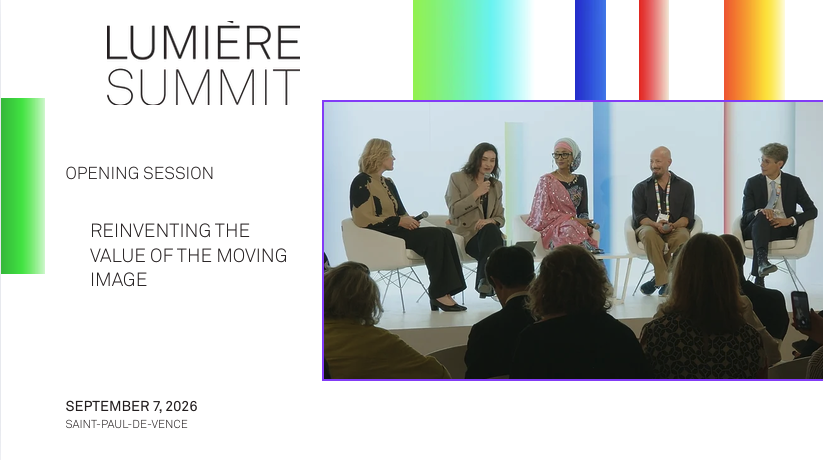
Reinventing the Value of the Moving Image
Never have we spent so much time on our screens, and never so little of it watching the works they were built to carry. As social platforms absorb an ever-greater share of viewing time, the old frontlines of the screen industries — cinema versus streaming, broadcast versus digital — no longer describe the real battlefield. Across film, television and gaming, the question is now whether intentional, ambitious works can sustain their value in an economy increasingly designed to capture attention. That value is not only economic; it is also cultural and democratic.
Panel featuring :
- Henna Virkunnen, Executive Vice-President for Tech Sovereignty, Security and Democracy, European Commission
- Hannatu Musa Musawa, Minister of Art, Culture and creative economy, Nigeria
- Tarik Saleh, Filmmaker
- Bruno Patino, President of ARTE France
Moderator : Cynthia Littleton, Variety

The Creator Economy: A Talent Ecosystem Comes of Age
For years, the established film and television industry circled the creator economy without quite knowing what to do with it. No longer: filmmakers who built their craft and their audience online are making their mark at the box office, and talent and IP now flow in both directions. In markets where traditional production and distribution systems remain limited, online creation is also becoming a primary route into the screen industries rather than a parallel one.
Fireside chat with:
- Anthony Russo, Director and Founder, AGBO
- Angela Russo-Otstot, Chief Creative Officer, AGBO
- Mo Abudu, Founder and CEO, EbonyLife
Moderator: Janice Min, The Ankler

Creating with the Audience: Building Communities Around Games
The old publishing model for games, where creation is done away from audiences and marketed right before the launch, is no longer enough. As self-publishing becomes more important, creators must now seek to build their audience as they develop their vision into a game: forming a community, earning its trust, building feedback loops, creating anticipation and turning early supporters into ambassadors. This session explores what the games industry can learn from film and television about building demand over time all while sustaining attention. It will further consider how games and linear media can jointly rethink how audiences are reached, engaged and turned into supportive communities in an environment where attention is increasingly fragmented across platforms, screens and formats.
Panel featuring :
- Kang Dae-hyun, co-CEO, Nexon Korea
- Yves Guillemot, CEO, Ubisoft
- Alain Tascan, President of Games, Netflix
Moderator: Antoine Sellam, Managing Director, Global Interactive Entertainment, JPMorgan

AI and the Moving Image: From Confrontation to Framework
The moving image has been shaped by numerous technological revolutions throughout the 130-year history of cinema. Is AI simply the latest, or a rupture of an entirely different order? This session asks how the industry can meet this transformation from a position of strength — neither retreating into blanket opposition, nor adopting AI models that sideline the people whose work makes them possible. It will identify the principles on which a sustainable framework must rest — consent, transparency, remuneration and respect for intellectual property — as well as the alliances, regulatory tools and market mechanisms needed to make AI a force for human creativity rather than one that erodes it.
Panel featuring:
- Gadi Oron, General Director, CISAC
- Mira Lane, Vice President of Technology & Society, Google
- Matthieu Lorrain, CEO, stealth startup, professor in Augmented Creativity, Columbia School of Art, United States
- Dame Elizabeth M. Daley, Dean, USC School of Cinematic Arts
Moderator: Patrick Caligiuri, Producer and Media Advisor
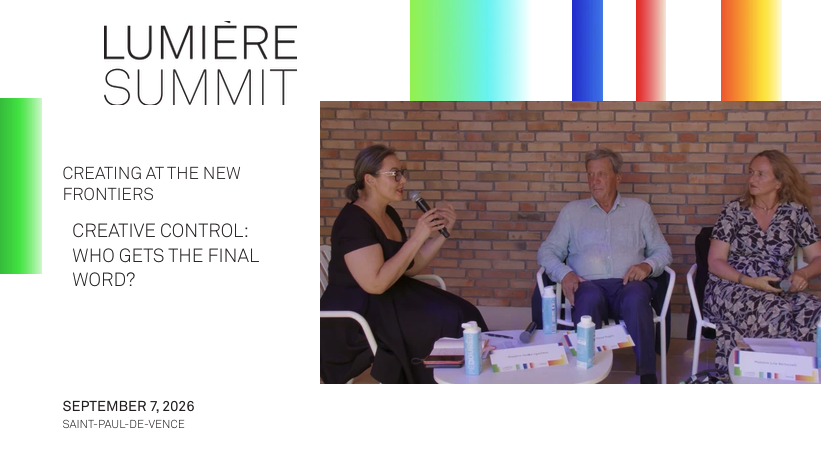
Creative Control: Who Gets the Final Word?
Everyone celebrates creators. Yet films and series are shaped by a complex chain of creative, industrial and financial decisions — involving studios, platforms, producers, financiers and, increasingly, data. Some systems recognize directors and screenwriters as authors of the work; in others, final cut remains a contractual privilege. But creative authority extends far beyond final cut: it is exercised through development, casting, financing, production, marketing and distribution. At each stage, who has the last word — and where does that leave the screenwriter, filmmaker or showrunner? This session examines the place of the author across the full decision-making chain, and how creative authority can be organized without sacrificing singular vision.
Panel featuring:
- Julie Bertuccelli,Filmmaker, Board Member of SRF, President of La Cinémathèque du documentaire
- Dora Bouchoucha, co-founder and producer, Nomadis Images
- Dariusz Jablonski, CEO and President, Apple Film Production
- Pascal Rogard, General Director, SACD
Moderator: Severa Irgacheva, Secretary-general, EFAD

The Race Against Piracy: A Global Challenge
Piracy has always evolved faster than the systems designed to stop it, but unconstrained by regulation and increasingly powered by the same technologies reshaping the industry itself, it is now accelerating at an unprecedented pace. For organizations across the value chain, effective action at scale is no longer simply a matter of efficiency — it is essential to protecting the foundations on which the industry depends. This session will identify the legal, technological and operational tools needed for a more coordinated global response — from intelligence-sharing and rapid cross-border enforcement to the responsibilities of online service providers, intermediaries, payment services and advertising networks. Panel featuring:
- Martin Ajdari, Chairman, ARCOM
- Gayton McKenzie, Minister of Sports, Arts and Culture, South Africa
- Sylvie Forbin, Assistant General Director,, Copyright and Creative Industries Sector, World Intellectual Property Organization, WIPO
- Emilie Anthonis, President & Managing Director at Motion Picture Association EMEA
Moderator: Patrick von Sychowski, Cine Group
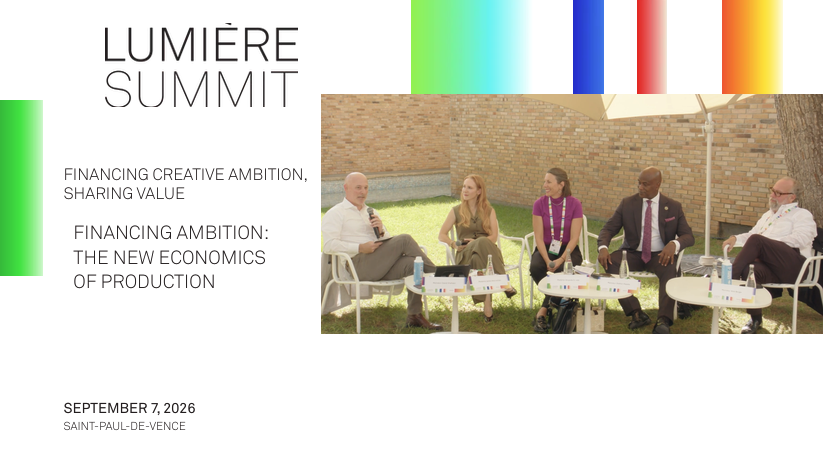
Financing Ambition: The New Economics of Production
As traditional financing models come under increasing pressure, ambitious production must rely on a broader and more diversified pool of capital. Presales, tax incentives, gap financing, distribution advances, and investment from broadcasters and streamers remain essential, but they increasingly need to be combined with new forms of financing. From private equity firms and family offices to strategic partnerships with brands, the challenge is not simply to finance individual works, but to provide producers with the long-term visibility and development capacity they need to build sustainable companies. This also requires strengthening local financing ecosystems and mobilizing capital in emerging markets, so that value is not only raised globally, but also retained and reinvested locally. This session examines how these sources can be assembled to share risk, sustain that ambition and generate long term value at both project and company levels. Panel featuring:
- Jackie Brenneman, President and CEO, IFTA,
- Osahon Akpata, CEO, Creative Africa Nexus,
- Amanda D. Lotz, Professor Consultant, Queensland University of Technology,
- Alex Berger, Chairman and CEO, TOG –The Originals Group
Moderator: David Shaheen, Managing Director, Head of Media & Communications Corporate Banking, JP Morgan

New Perspectives on Local and Global Co-Prosperity
In an era where borders and platform boundaries are increasingly blurred, the most local narratives are proving to be the most globally resonant. How can the global screen industry move forward to build an authentic, reciprocal ecosystem where local creative diversity and global scale thrive together? This session explores how global networks can forge a robust virtuous cycle with unique local storytelling—reinvesting in local production ecosystems while enriching global cultural diversity. Bringing together key industry leaders driving the global and local audiovisual ecosystem, this roundtable examines tangible frameworks across areas including cross-border co-production, joint investment, and talent development to ensure long-term co-prosperity across the screen industries. Panel featuring:
- Lee Jae-myung, President of the Republic of Korea
- Isabel Haskey, vice-president, Netflix
- Yoon Sang-Hyun, CEO, CJ ENM
- Pierre-Antoine Capton, Founder and CEO, Mediawan
- Choi Soo-Yeon, CEO, Naver
- Emilie Anthonis, President & Managing Director at Motion Picture Association EMEA
Moderator: Ahn Hyun-Mo, Independant Presenter

Broadcasters and Streamers: Old Rivals, New Playbook
Broadcasters and streamers spent a decade fighting for the same audiences. Now they increasingly need each other. Linear viewing is declining in many markets, but not all of television’s strengths have carried over into the digital age. Broadcasters and streamers are converging in the development, financing and distribution of series, combining local creative ecosystems with global reach. Each brings capabilities the other lacks: broadcasters’ advertising power, live programming and national reach; streamers’ data, personalization and product agility. This session will map the partnerships, products and business models that this convergence could unlock. Panel featuring:
- Rodolphe Belmer, Chairman and CEO, TF1,
- Isabelle Degeorges, President, Gaumont Télévision
- Andrew Bennett, Head of International Programming and Partnerships, Amazon Prime Video
- Paulo Marinho, CEO, Globo
Moderator: Elsa Keslassy, Variety

Window of Value: The Case for Theatrical Exclusivity
After years of pressure for ever-shorter windows, theatrical exclusivity is regaining ground as a powerful driver of attention, cultural impact and long-term value. A cinema release does more than generate box office: it turns a work into an event, builds visibility and strengthens its trajectory across subsequent windows. This session brings key players to examine why exclusivity is being rediscovered, and how a renewed commitment to theatrical release can create greater value throughout the chain. Panel featuring:
- Laure de Boissard, CEO, Pathé Cinemas, France
- Alejandro Ramírez Magaña, CEO, Cinépolis, Mexico
- Eduardo Acuna, CEO, Regal Entertainment Group, United States
- Jane Hastings, CEO, EVT, Australia
- Hiro Matsuoka, President and CEO, Toho Co., Ltd., Japan
- Eddy Duquenne, CEO, Kinepolis, Belgium
- Tim Richards, Founder and CEO, Vue, United Kingdom
Moderator: Cynthia Littleton, Variety

Who Chooses What We Watch?
Discoverability is a matter of cultural sovereignty that cannot be left solely to algorithms. Recommendation systems have already become central intermediaries, helping viewers navigate an unprecedented abundance of choice through increasingly personalized experiences. The stakes are decisive: preserving the plurality of voices through which works are created, discovered, discussed and desired. But cultural sovereignty is not only about protecting diversity at home; it is also about building strong national creative ecosystems with the capacity to compete, circulate and thrive in a global market. The ability to produce distinctive local works — and ensure that they can find audiences around the world — is becoming a critical dimension of cultural sovereignty. Fireside Chat with Matthew Buchanan, Co-CEO, Letterboxd, New Zealand Moderator: Janice Min, Founder and CEO, The Ankler Fireside Chat with:
- Marc Miller, Minister of Culture and Identity, Canada
- Rodolphe Belmer, Chairman and CEO, TF1
Moderator: Janice Min, The Ankler
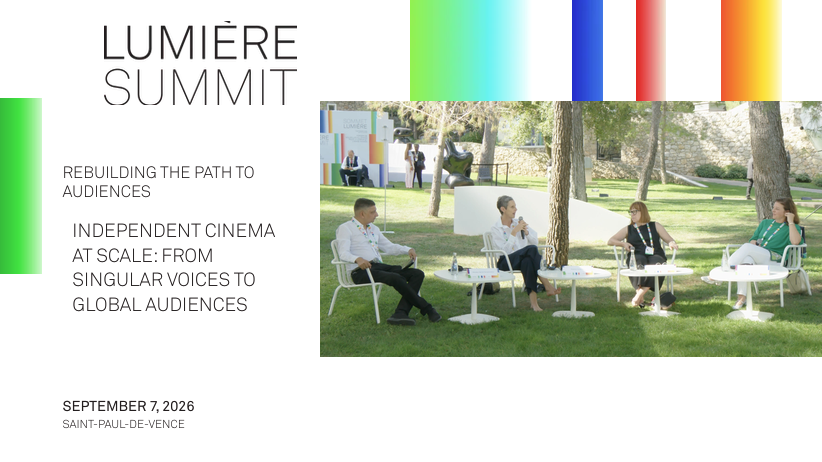
Independent Cinema at Scale: From Singular Voices to Global Audiences
Audiences are increasingly drawn to distinctive voices, even as the traditional mid-market that once carried ambitious independent films is being hollowed out. The challenge is no longer simply to produce singular works, but to give them the reach, visibility and longevity needed to compete in a global market shaped by a handful of dominant releases. Smarter rights strategies, coordinated international releases, shared audience data, stronger festival-to-market pathways and new alliances between producers, sales agents, distributors and exhibitors could help independent cinema achieve scale on its own terms. This session examines how independent films can build momentum across territories, turn individual successes into lasting bodies of work and reach audiences worldwide, without diluting the creative identity that made them distinctive in the first place. Panel featuring:
- Carole Scotta, Co-Founder, Haut et Court
- Ewa Puszczynska, Founder, Extreme Emotions
- Hania Mroué, Director, Metropolis Art Cinema
Moderator: Naman Ramachandran, Variety

Rebuilding Film Circulation: A New Compact Between Distribution and Exhibition
Film circulation is increasingly constrained by structural imbalances: concentrated access to screens and marketing, uneven allocation across venues and territories, and release calendars dominated by a small number of major titles. Many works struggle to find an audience, while audiences do not always find the films they are looking for. These imbalances take different forms across markets, from congested theatrical systems to regions where screens remain scarce, concentrated in major cities or inaccessible to large parts of the population. This session examines how distributors and exhibitors can improve release planning, data-sharing, programming commitments and access to screens, so that a wider range of films can find audiences, travel across territories and generate lasting value. Panel featuring:
- Jackie Brenneman, President and CEO, IFTA
- Eduardo Acuna, CEO, Regal Entertainment Group
- Mathias Holtz, President, Europa Cinemas
- Sidonie Dumas, CEO, Gaumont
Moderator: Patrick von Sychowski, Cine Group

Easy to Criticize, Impossible to Replace: Rethinking the Festival
Film festivals are easy to criticize but much harder to imagine away. At a time when works struggle to be discovered, financed, sold and seen, festivals remain among the few spaces where works are selected, celebrated, debated and experienced collectively. Yet their role can no longer be taken for granted. As series have developed their own festivals, and interactive and digital media face similar challenges of visibility and legitimacy, the festival model is already expanding beyond film alone. This session examines what only festivals can still do, how they can renew audiences and protect their independence, and how their models must evolve for them to remain engines of discovery and circulation rather than relics of the industry. Panel featuring:
- Park Kwang-Su, Chairperson, Busan International Film Festival, Republic of Korea
- Iris Knobloch, President, Festival de Cannes, France
- Tricia Tuttle, Festival Director, Berlinale, Germany
- Faisal Baltyuor, CEO, Red Sea Foundation, Saudi Arabia
- Magdalene Reddy, Director, Durban Film Mart Institute (DFMI), South Africa
- Shivendra Singh Dungarpur, Founding Director, Film Heritage Foundation, and Director, MANI Festival, India
- Michaël Marin, CEO, Citia (Annecy International Film Festival), France
- Laurence Herszberg, General Director, Séries Mania, France
- Cameron Bailey, CEO, Toronto International Film Festival (TIFF), Canada
- Maialen Beloki, Deputy Director, San Sebastian Film Festival, Spain
- Peter Debruge, Director, South by Southwest Film & TV Festival, United States
Moderator: Rajendra Roy, Chief Curator, Film, MoMA, United States

Saving the World’s Film Heritage: Now or Never
Much of the world’s film heritage remains unpreserved, with collections in parts of Africa, Asia, Latin America and the Middle East particularly exposed by fragile materials, limited archival capacity, aging facilities and disappearing technical knowledge. Losing these works would mean erasing part of our shared memory and denying future generations access to the images through which societies understood and imagined themselves. This session asks how we can unite around an urgent global effort rooted in local expertise to identify, preserve and make endangered collections accessible. Part 1 – Opening Remarks
- Éléonore Caroit, Minister Delegate for Francophonie, International Partnerships and French Nationals Abroad, France
Part 2 – Panel featuring:
- Valéry Freland, Executive Director, ALIPH
- Shivendra Singh Dungarpur, Founding Director, Film Heritage Foundation, and Director, MANI Festival
- Vanessa Bendetti, Head of Motion Picture and Entertainment, Eastman Kodak Company
- Thierry Frémaux, General Delegate, Festival de Cannes; General Director, Institut Lumière
Moderator: Todd Spangler, Variety

Safer Sets, Different Stories: Why Gender Balance Matters
Gender equality, the prevention of violence and harassment, and the accountability of all stakeholders are becoming essential benchmarks for a sector that stands at the intersection of industry and creation. The stakes are not only organizational but also artistic: an industry that does not fully make room for women deprives itself of half of its perspective on the world. This session examines how the film and tmoving images sectors can advance equality and foster safer working environments. Through a discussion of policies, incentives and industry commitments, participants will explore shared challenges, highlight emerging good practices and consider how greater inclusion can strengthen both the industry’s credibility and the diversity of stories brought to the screen. Panel featuring:
- Tricia Tuttle, Festival Director, Berlinale
- Angèle Diabang, Filmmaker
- Anna Marsh, CEO, StudioCanal; Deputy CEO, CANAL+
- Cameron Bailey, CEO, Toronto International Film Festival
- Ben Roberts, Director General, British Film Institute
Moderator: Patrick Caligiuri, Producer and Media Advisor

Where Are the Young? Opening the Industry to a New Generation of Leaders
Renewing audiences is a strategic priority; renewing the industry itself is no less urgent, and each can help drive the other. Yet the screen industries most anxious about losing the next generation have often underinvested in reaching it: in a contracting market, with increasingly uncertain career paths, they must confront the cost of training, the scarcity of entry-level roles, the concentration of professional networks and the barriers that determine who can enter, progress and remain. This session asks how education and training can move from a cost borne by too few to a shared investment the industry cannot survive without, and how more open pathways can ensure that the stories of tomorrow are shaped by those who will live with them. Panel featuring:
- Mehret Mandefro, Executive Producer and Managing Director, African Film and Media Arts Collective (AFMAC)
- Dr. Celine Parreñas Shimizu, Dean and Distinguished Professor, School of Theater, Film & Television, UCLA
- Michel Hazanavicius, Filmmaker and President, La Fémis
- Mo Abudu, Founder and CEO, EbonyLife
Moderator: Lorna Tee, Asian Film Alliance Networkr

Creation and Democracy: What Holds Us Together
In times of war, fragmentation and democratic distrust, it is tempting to treat information as strategic and creation as secondary. That distinction is false. Democracies need reliable facts, but facts alone cannot hold a society together when common spaces are disappearing. Information and creation have equal dignity and perform complementary functions: information helps us understand what is happening; creation helps us imagine what it means. Through stories, emotions, characters and shared images, works teach us to see, feel and imagine together. They make other lives intelligible, sustain a common world and preserve our capacity for empathy — and for disagreement. Creation is an essential infrastructure of democratic life. Panel featuring:
- Tetyana Berezhna, Vice Prime-Minister and Minister of Culture, Ukraine
- Françoise Remarck, Minister of Culture, Côte d’Ivoire
- Costa-Gavras, Filmmaker
- Abderrahmane Sissako, Filmmaker
Moderator: Severa Irgacheva, Secretary-General, EFAD

Freedom to Create: Unevenly Defended
Freedom to create is vital to the diversity of the moving image — universally affirmed, but unevenly defended. Creators worldwide face censorship, intimidation, retaliation, imprisonment and exile. Threats come not only from authoritarian states: access to financing, distribution and major markets can carry unspoken conditions on what stories may be told, and by whom. Protections remain fragmented and reactive, often mobilized only once a creator is already in danger. This session asks what genuine protection requires: early-warning networks that act before exile becomes the only option; safe havens that preserve the ability to work, not merely survive; financial and legal support that sustains visibility and independence; and safeguards against protection becoming exposure when advocacy itself increases risk. Panel featuring:
- Rima Mismar, General Director for Media and Cultural Industries, Arab Fund for Arts and Culture (AFAC)
- Charles Gillibert, CEO, CG Cinéma
- Darren Walker, President and CEO, Anonymous Content
- Nabil Ayouch, Director, Producer
- Vanja Kaludjercic, Festival Director, International Film Festival Rotterdam (IFFR)
Moderator: Eva Nguyen Binh, President, Institut Français

Image Education, the Literacy of the Twenty-First Century
The screen industries helped build today’s civilization of images. They can now help repair our relationship to it. The challenges they face are also those of our societies. As attention fragments, so too do many of the common spaces through which we see, feel and debate together. At a moment when images are losing some of their power to bring people together and are increasingly used to divide them, the future of these industries depends on reasserting their place in society. Empowering the next generation means giving young people greater agency over the images they encounter: the ability to navigate an ocean of content, recognize works of lasting value, and understand that this value is economic, cultural and democratic alike. In a world of infinite feeds and increasingly passive screen consumption, image education has become an essential literacy for the twenty-first century. It fosters critical viewing, cultural curiosity and a healthier, more active relationship to screens. It is also the industry’s longest-term investment: building the next generation of audiences means giving young people the tools, appetite and opportunities to encounter ambitious works. The closing plenary will launch a major international initiative to make image education a universal ambition, support national programs adapted to different cultural, educational and technological contexts, and enable countries to share the models and methods they have developed. Panel featuring:
- Alejandro Ramírez Magaña, CEO, Cinépolis
- Faisal Baltyuor, CEO, Red Sea Film Foundation
- Åsa Regnér, Deputy Director-General of UNESCO
Moderator : Marjorie Paillon
The Next Generation and the Power of Images by Alessandro Giuli, Minister of Culture, Italy
Closing remarks : Chae Hwi-young, Minister of Culture, Sports and Tourism, Republic of Korea Catherine Pégard, Minister of Culture, France